How to Start a Blog and make money in 2023

Blogging
Last updated March 22, 2022 | by Kirk | 10 Min read
Blogging

Beginning and running your own blog could end up being one of the best decisions that you ever make in your life.

You see, not only is blogging a great way to express your thoughts to people in written form, it can also be a great way to make an income, either full time or on the side.

Furthermore, starting and running a blog is a commitment. You have to dedicate yourself to learning the tricks of the trade when it comes to SEO, writing quality and valuable content every day (or almost every day), and engaging with your audience.

But if you can do that, blogging can be a very rewarding experience, not only financially but also personally. On top of that, starting a blog is simple! It may not be incredibly easy, but it is absolutely simple.

As we will discuss in this article, starting a blog really comes down to the following principles:

  1. Choosing Your Niche
  2. Choosing A Name 
  3. Choosing A Host
  4. Choosing A Plan 
  5. Choosing A Domain Name
  6. Creating You Blog
  7. Promote 


In this guide, we will walk you through these steps to teach you how to start and run your very own blog on any subject or niche of your choice. By the end of this article, you will have acquired significantly more knowledge on how to properly start a blog than you had before.

Without any further ado, let’s get started!

1. choosing your niche  

The very first thing you need to do is to choose your niche. This is probably something that you’ve already thought extensively about, and maybe you’ve even already decided.

The reason why choosing a niche is so important is because it gives your blog direction. Your niche determines what umbrella your posts will fall under in terms of general topics, and it also determines what kind of people are most likely to be interested in your blog as well.

You may see a blog that is getting lots of traffic, high social media engagement, and high Google rankings.

Does this mean that you should automatically choose a niche that is the same or similar as this hypothetical blog?

Not necessarily.

Maybe you already know definitively what your niche is going to be. Or maybe you have a general idea, or know idea at all. Regardless, when determining your niche, it’s a wise idea to ask yourself the following questions:

What Do You Love?

This is important because if you have no love or passion for your topic or niche of choice, you’re simply not going to enjoy making content for your blog. And if you don’t enjoy it, then you will feel less motivated to contribute to it, and therefore it will be less likely to grow. Plus, running a blog about something you actually love or care about is more fun, right?

Furthermore, readers will be able to clearly notice your passion for the topic at hand. It will show in your writing, and you’ll naturally gain more viewers that way as well.

Is This Something You Can Spend A Long Time Writing about?

Can you dedicate yourself to spending hundreds or even thousands of hours writing about this niche? You see, you need to love writing about it, but you also need to be willing to spending a lot of time writing about it as well.

If you are struggling with coming up with a good niche here, you can ask yourself a few questions:

  • What classes in college or high school did you enjoy writing about the most?
  • What news stories (sports, tech, politics, etc.) most interest you?
  • What do you find yourself researching the most about online?
  • What are your hobbies?
  • What would your dream job be?
  • If you had $20 million in the bank what would you do day to day?

That is what you should start your blog on.

Are You Knowledgeable About It?

In order for your blog to be truly successful, you have to establish yourself as an authority figure, and the only way you can do that is if you are truly knowledgeable about the niche at hand. Even if you don’t know everything about this niche right away, you do need to have some degree of knowledge about it. After all, you can guarantee that your competitors have lots of knowledge. If you don’t have a lot of knowledge but are interested, don’t worry you can always learn anything you set your mind on.

How Specific is it?

Next, you will need to ask yourself about how specific your niche of choice is. There are pros and cons of going either specific or broad. If you try to go too specific in your niche there may not be a large enough market. The key here is doing your research.

Are People Searching For It Right Now?

Use a keyword searching tool (such as google keyword planner and Facebook audience Insights to pinpoint the top searches people have for the niche you are considering. This will give you an idea of whether there will be an audience for your blog to begin with.

For example, maybe you know that you want to write about something in the outdoors niche. But you also know that ‘the outdoors’ is a very broad subject. So you need to narrow it down to say, camping or hiking. You can then search for how many searches are done in the ‘camping’ or ‘hiking’ niches specifically.

Or you could narrow things down even further. Maybe you only want to write about hiking in certain areas (i.e. hiking in Alaska or hiking in Australia). You can then pinpoint that down further in your searches as well. What matters is that once you narrow down your niche, that there is enough of an audience.

Is There Money To Be Made?

Running a blog can be a very rewarding experience, and not only personally but as well as financially. Even if your blog doesn’t start making you a living overnight, it can still be a good source of passive income on the side for you as well.

The simple fact of the matter is that certain niches are far more profitable than others. The best way to determine what the potential profit for your blog will be is to assess how many searches it is receiving in relation to the level of competition. The sweet spot is for there to be a sizable amount of traffic and searches combined with less

2. choosing a name  

Once You Have Narrowed Down Your Niche, The Next Step Is For You To Narrow Down Things Even Further And To Get Creative. That’s Because Now The Time Has Come To Choose Your Name. Naming Your Blog Is Admittedly A Bit More Challenging Than Choosing A Niche, Because It Literally Serves As The Name Of Your Brand Along With It. Your Blog Name Will Also Be Your Domain Name (Which We Will Get To In A Little Bit) Once You Choose Your Name You Can Not Go Back.

Creating A Blog Name

There are several steps that you can do to choose a blog name. Maybe you already have a couple of ideas in mind. But if not, you can brainstorm in the following ways:

Research: First and foremost, you can also research your competitors and see what kind of names they have. You should notice that their names relate strongly to their niches as well.

Niche Related Names: Next, choose a name that relates to your niche. The average person should be able to immediately know what your blog is generally about based on the name alone.

Content Related: Think about the content, and think about your blog ranking in the Google search engines. If there are any names you like but that you can’t see ranking high on Google, don’t go with them.

Your Name: A popular option among bloggers is choosing to name their blog after themselves. This is great for branding and for becoming an authority in your niche. This is not a good option if you don’t want to disclose your name or if you ever plan on selling the blog.

Get Creative: Finally, be creative. Think about your brand and your voice. Your voice will show in your blog’s content, but it can show in your blog’s name as well. The catchier and more intriguing your blog’s name is, the better. You may also want to try alliteration or a play on words.

For example, if you’re going to run a blog about your hiking experiences in California, you don’t want to name it “Hiking Adventures in California” or something to that effect. That may communicate what the blog is about, but it’s also far too generic and doesn’t communicate your voice. Get creative!

Plus, there are probably an abundance of blogs with a name similar to “Hiking Adventures in California” already. Which leads us to the next topic…Search For Availability

Do you know the frustration of when you try to choose a new email name but found that it’s already been taken?

This can happen with blog names as well, so you need to confirm that your blog name of choice is indeed available.

Don’t be disheartened just because your name of choice isn’t available and is already being used by another creator in the same general niche. You also will want to avoid blog names that sound very similar to ones that already exist, even if they aren’t completely identical.

To search availability, check on bluehost first because they offer free domain names with their hosting. If your name isn’t available on bluehost, search on godaddy

There are hundreds of millions of blogs in existence today, so don’t be surprised if your preferred name is already taken. When brainstorming, you should ideally come up with at least three examples and then check the availability of all three.

In summary, your name should be easy to search, immediately convey what your blog is generally about, and be available.

3. choosing a host

Once you have chosen a niche and a name for that niche, the next step is to choose a web host.

What Is A Host?

A web host essentially allows your website to be accessible by other people on the internet. Think of the entire internet as a big space, and as your blog occupying a very small sliver of that space. Your web host is what enables your blog to do just that. Just as you need to purchase property to build a house, you need to purchase a web host to build your blog.

What Is A Domain?

Many people seem to believe that the terms ’host’ and ‘domain’ are alike and refer to the same thing. This could not be any further from the truth.

The host is the virtual location for your blog. The blog is, well, the blog itself. The URL is the address of your blog that is always visible at the search bar.

The domain is the name of the URL that follows the https:// that you see at the top.

There are a lot of hosting services that will allow you to register your selected domain name name with them, and this is where some confusion enters the minds of some people. Many web hosts will allow you to register your domain name with them (and sometimes even for free), or otherwise will allow you to transfer your existing domain name.

What Are The Primary Types Of Web Hosts?

There are two primary options when it comes to hosting services: free web hosts and paid hosts.

Free web hosts are, well, free. But in the long run they aren’t as good of an option because they don’t allow you to choose your own domain name (at least not usually), have very limited design options, will be difficult to transfer your content over from another platform (if you have existing content), and may not even allow you to generate income from day one.

Paid hosting services will cost you money, but the investment is usually very minimal and doesn’t come out to more than a few dollars a month. This will be a very valuable investment because paid hosting services, which include the popular option such as Bluehost.

For example, paid hosting services allow you to choose your own domain name and give you far more design options. If you truly want to customize your blog to make it unique, a paid web hosting is easily the way to go. Finally, a paid web hosting provider should allow you to optimize the performance of your blog and monetize it from day one, so it’s possible for you to generate income with the blog in the first month. Simply put, you will earn more for your money with a paid hosting service and it’s a better choice alone for that reason. But how do you go about choosing a web hosting plan? That’s what we’ll talk about in the next section.

4. Choosing a plan

Bluehost and HostGator are probably the two most popular blog host options. For the basic packages, you can plan on spending roughly between three to seven dollars a month. If you want the more advanced features, you can plan on spending between twenty to thirty dollars a month. However, for your first time blog, the basic plan option should be sufficient.

A basic hosting plan will give you access to standard features necessary to start your blog and plenty of room for growth. Remember, you can always upgrade your web host later if you feel that it is indeed necessary.

So, what are the primary features and qualities to consider when choosing a web host? Keep in mind each of the following:

At Least One Website

The hosting plan you choose should offer you at minimum one website or blog in their package. However, as you upgrade to more expensive plans, you should be able to add more websites as you see fit. Keep in mind that you’re only starting one blog for now, so you shouldn’t need to buy an upgraded plan to accommodate more sites.

Obtaining Your Domain

With a basic hosting plan, you should be able to get at least one domain from your hosting site or be allowed to transfer your existing domain name. Look to see if there are any subdomains offered with your hosting plan as well.

Bluehost offers free domains with their plans but if the one you are after is unavailable you can possibly purchase it for a decent price at godaddy.com

Features to Consider:

Enough Storage Space
You should plan on needing around fifty gigabytes of space for your blog to start with. Of course, that might change as your blog grows, but to start fifty gigabytes should be sufficient for quite some time as blog do not require a lot of digital storage to begin with.

Fast Enough BandWidth

Bandwidth refers to the speed of your website and how quickly data can be moved over an internet connection. Ideally, your hosting plan should offer you unmetered bandwidth like HostGator and Bluehost do. This way, you will not be charged for more bandwidth than your site needs.

SSL Protection

SSL protection, or Secure Sockets Layer protection, guarantees that the data between your server and your browser will be encrypted. You know that you have this with the lock icon at the top of the address bar. If you click on this lock, you can seven see your site’s certification settings. Most basic web hosting plans should offer a shared SSL option, and perhaps even a private SSL that is unique to your domain if you choose to upgrade the package.

Tied Email Accounts

One reason why a self-hosting site can be so convenient is because of the fact that they can allow email accounts to be tied to your blog, and allowing you to have unlimited emails if you buy an upgraded option. If there are limits to email storage, make sure you find what those limits are before you go with your web host of choice. Some upgraded accounts will also offer email management systems, which are worth looking into as well.

Dedicated IP Address 

An IP address pinpoints the location of your website. If you have a shared IP address, it means that your blog is being stored on a shared server. A dedicated IP address, however, will be better for your blog, and especially if you plan on using your blog for business purposes.

If you go with Bluehost you wont need to worry about these features because they include everything you need to get started.

step by step example (with bluehost)

For this example, we will use Bluehost as an example on how to start your blog.
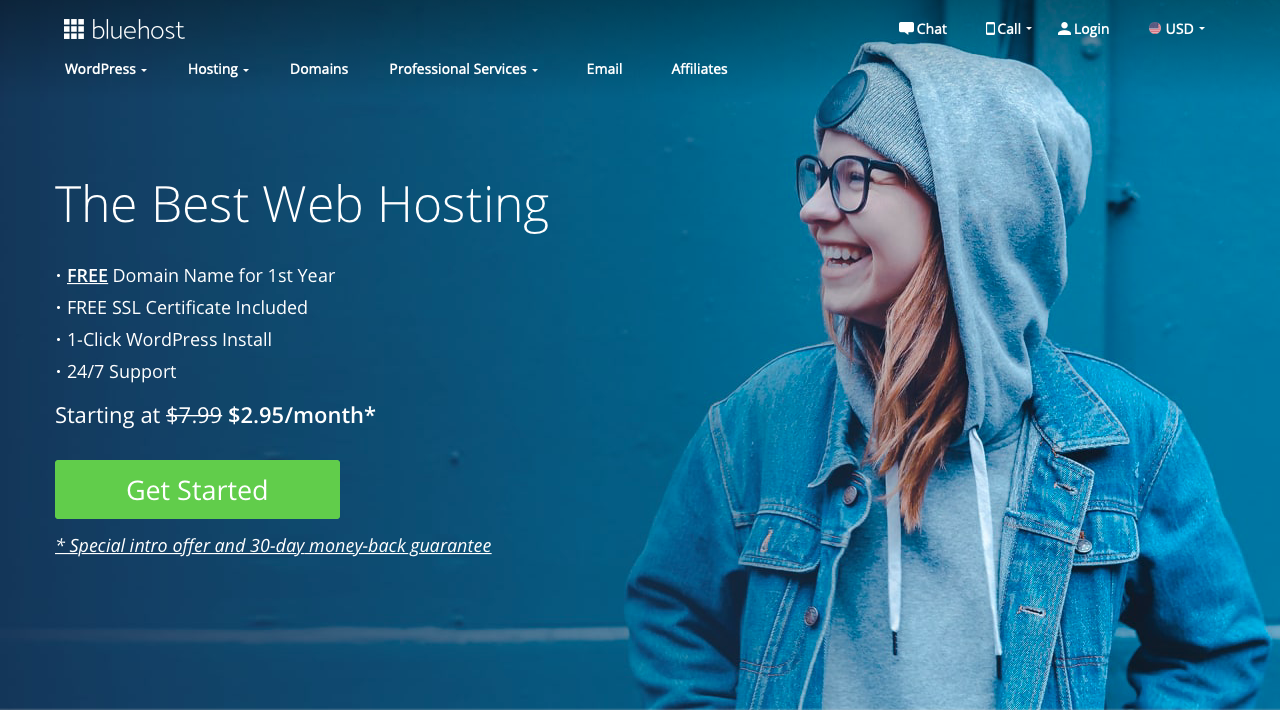

Bluehost is a great choice because it’s very affordable and widely used.

Go with a $2.95 a month plan because it is the cheapest choice and perfect for starting out.
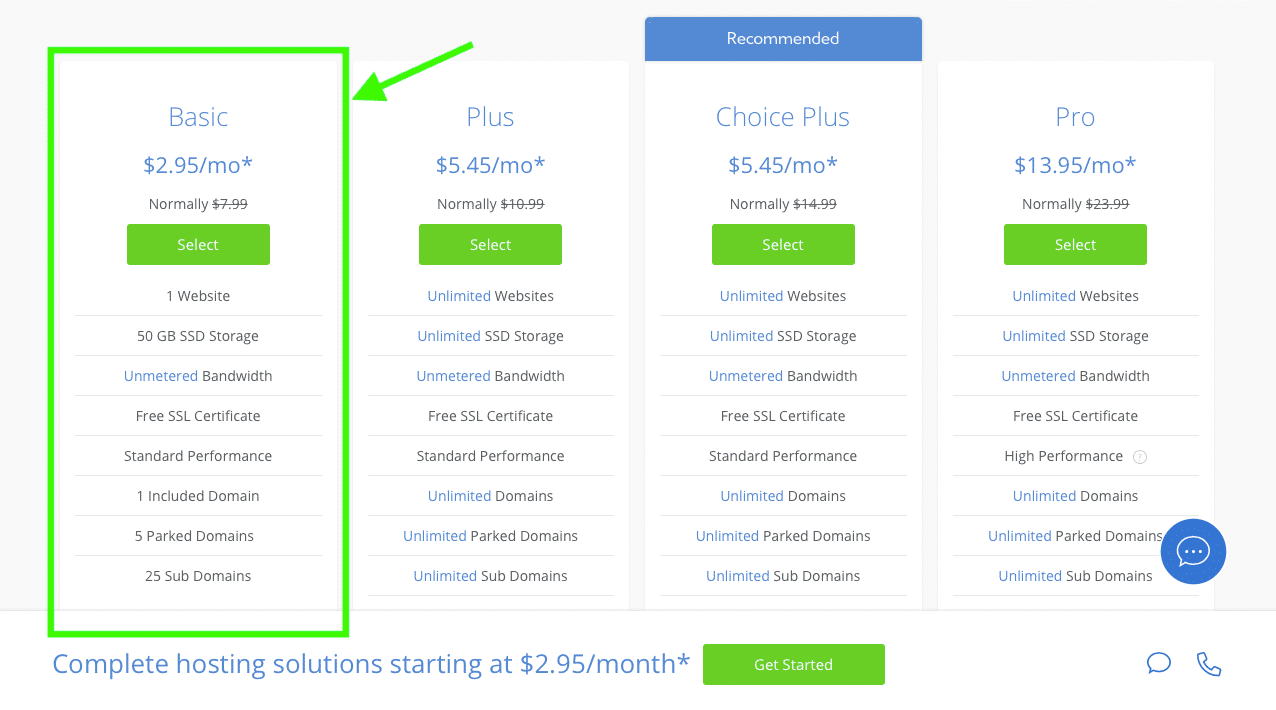
Once you have chosen a plan, Bluehost will take you to the domain section. You can either insert a new domain name, or you can transfer an existing one. Bluehost even offers free domains, but if your domain is unavailable try godaddy. There you will have the option to purchase the domain.

5. choosing a domain name  

By this point in this guide, you should already either have your blog name/domain name chosen or at least have some ideas in mind.

If your domain name of choice is not available, you should ideally have at least two or three backup options that you can turn to and check right away as well. You may want to purchase additional parked domain names as well to save for future use.

For your primary domain name, always go with a .com extension. These are by far the most popular for bloggers, and users are more familiar with .com extensions as well.

Blogs with a .com extension tend to do better for SEO purposes as well, which means it will have greater odds of ranking higher.
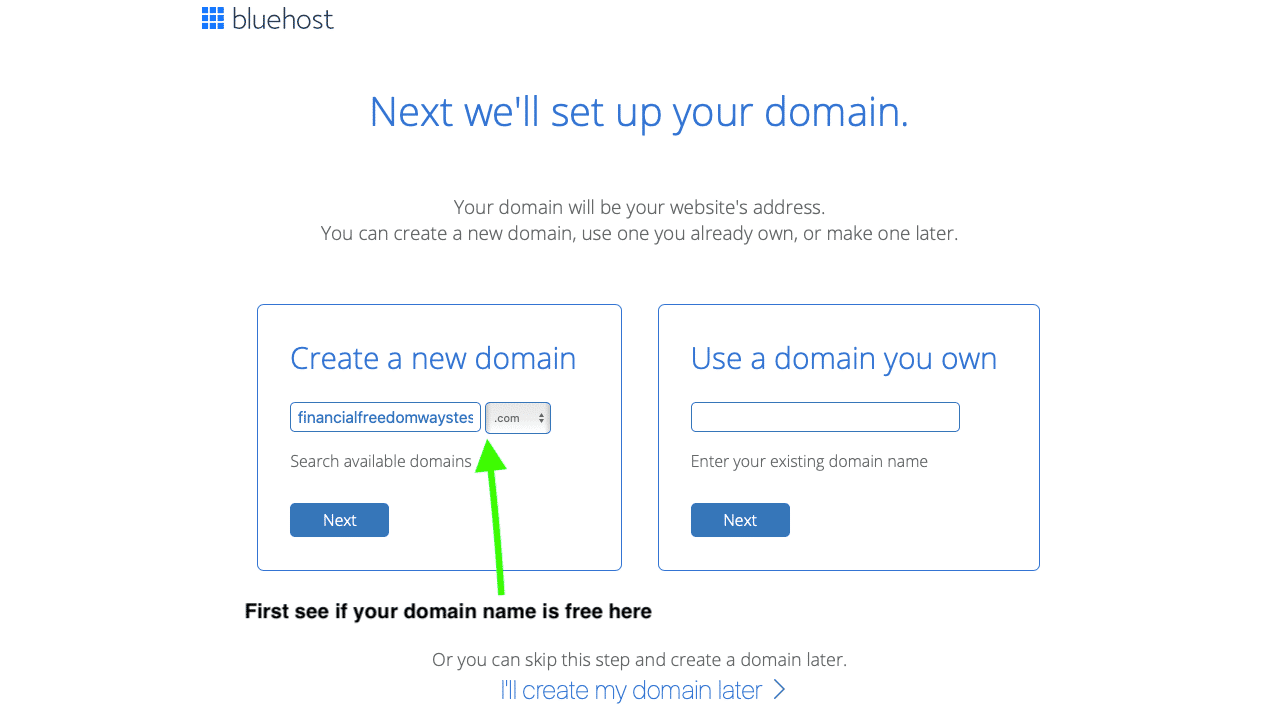
If it’s free it will look like this.

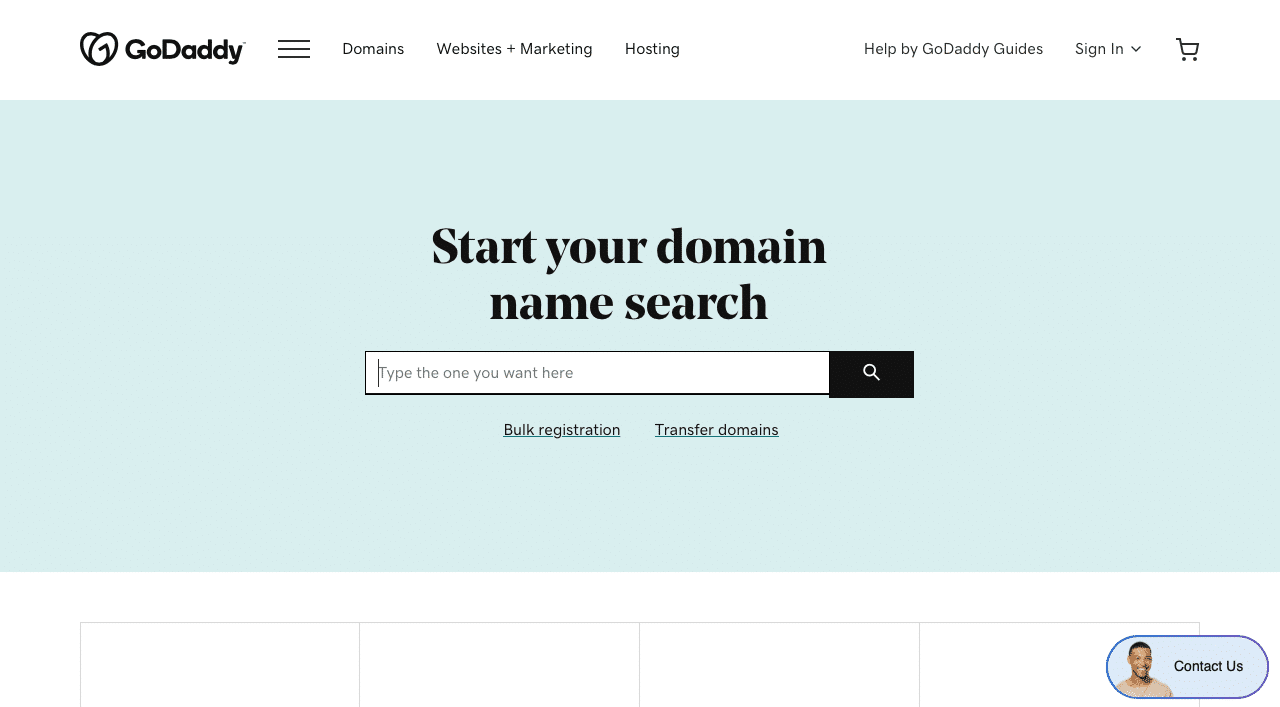
If it’s not available, try godaddy. But starting out I wouldn’t spend too much on getting the perfect domain. Like we talked about earlier you may have to get creative.
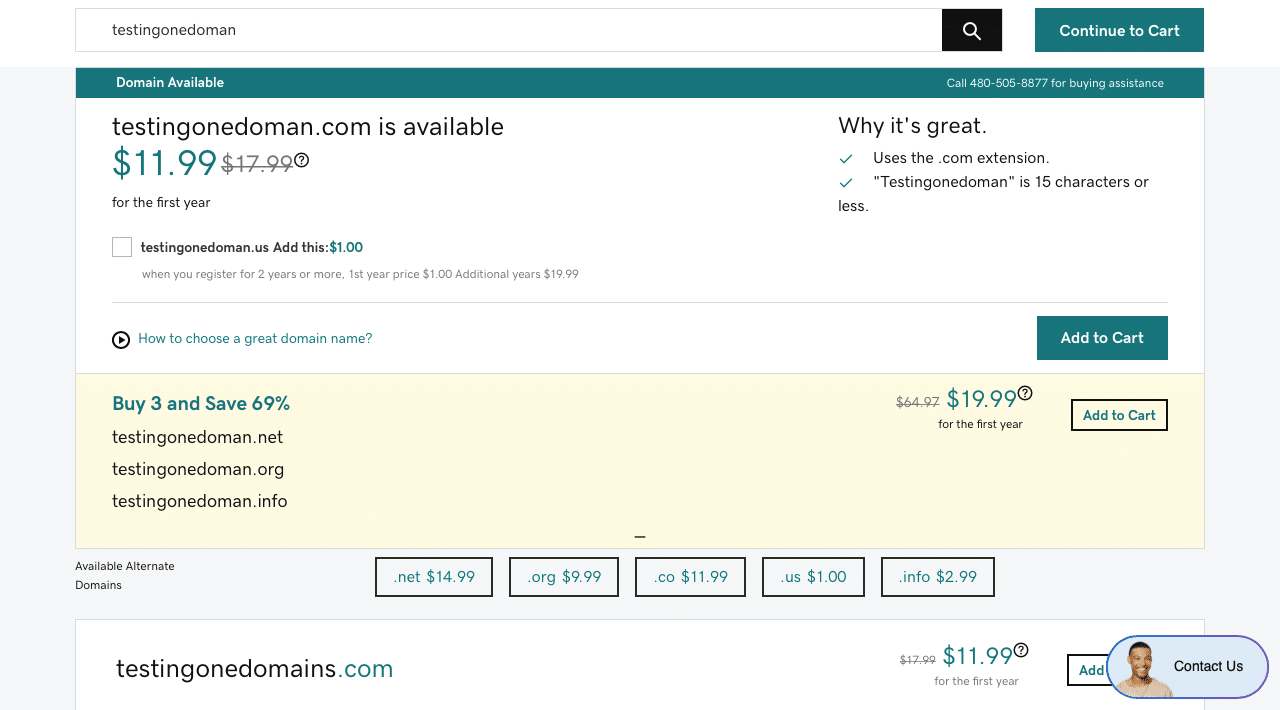
Godaddy will tell you why your selected domain is great and will even show you related domains that are available.
After you have purchased your domain from godaddy you then go back to bluehost and paste your domain in the “use a domain that you own” section.

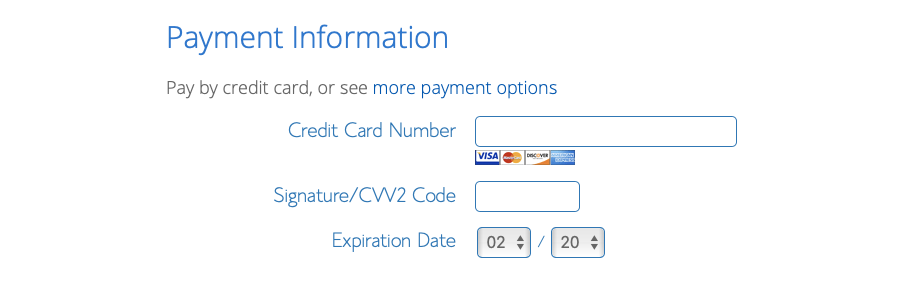
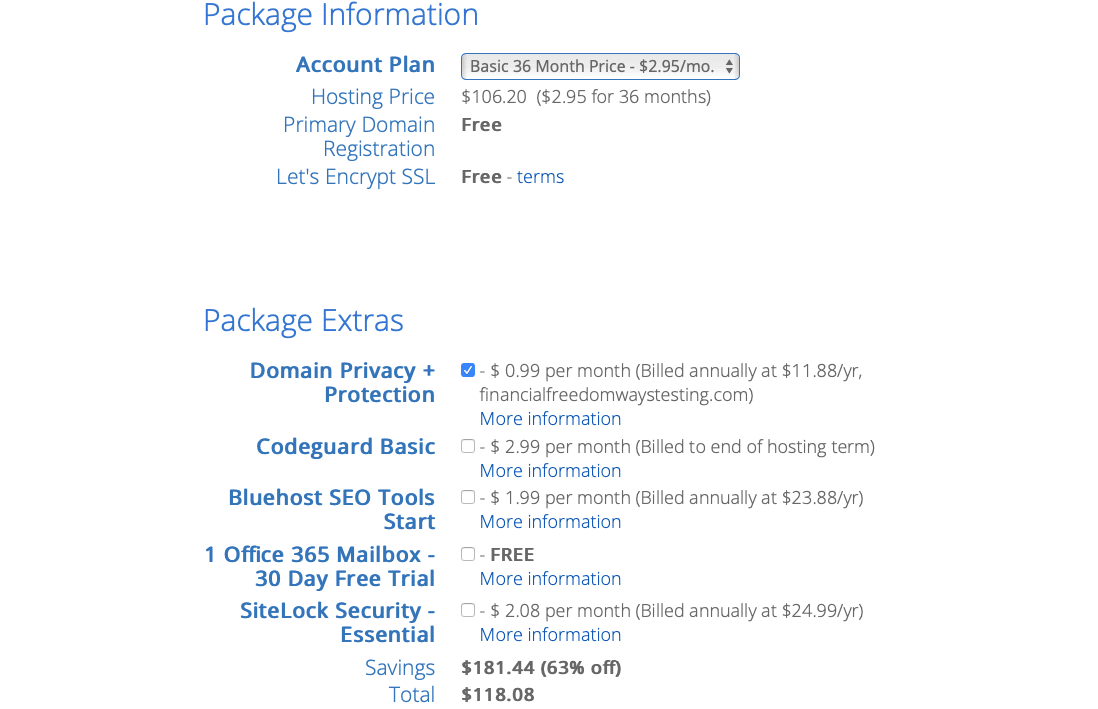
Once you have everything sorted out with your domain name you will then create your account, select package options, and put in your payment information.
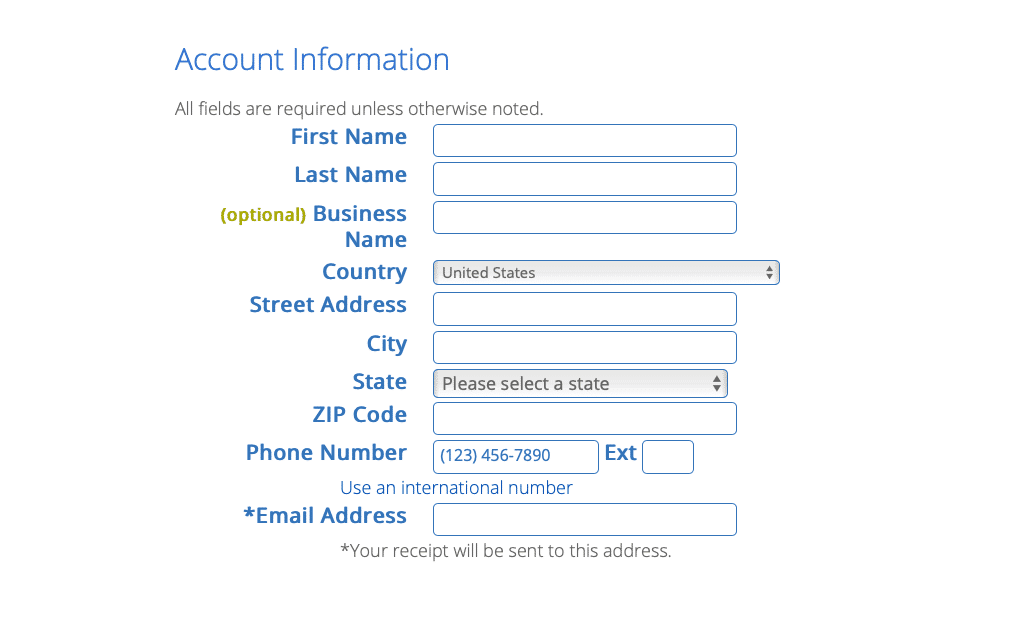
On the account plan, go with the 36 month option. It may be a little more money upfront but it’s a much better deal.

The only thing I select for package extras is the domain privacy protection
6. creating your blog  

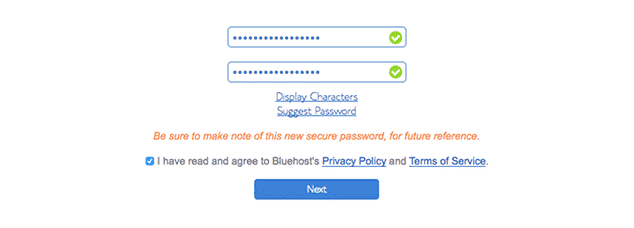
Now we’re finally at the fun part: creating your blog! Once your web hosting plan is purchased and you have registered your domain name, you are ready to officially begin designing your blog. The best choice for building and running a self-hosted blog will easily be WordPress. WordPress is easy to use, comes with lots of design options, and has lots of support. Bluehost is great because it automatically installs wordpress for you! Next you will be taken to a welcome page. On that page you want to press the green button that says “set password.”  Then, set up a password and then hit the next button. Once you have done that bluehost will send an email with all your info.


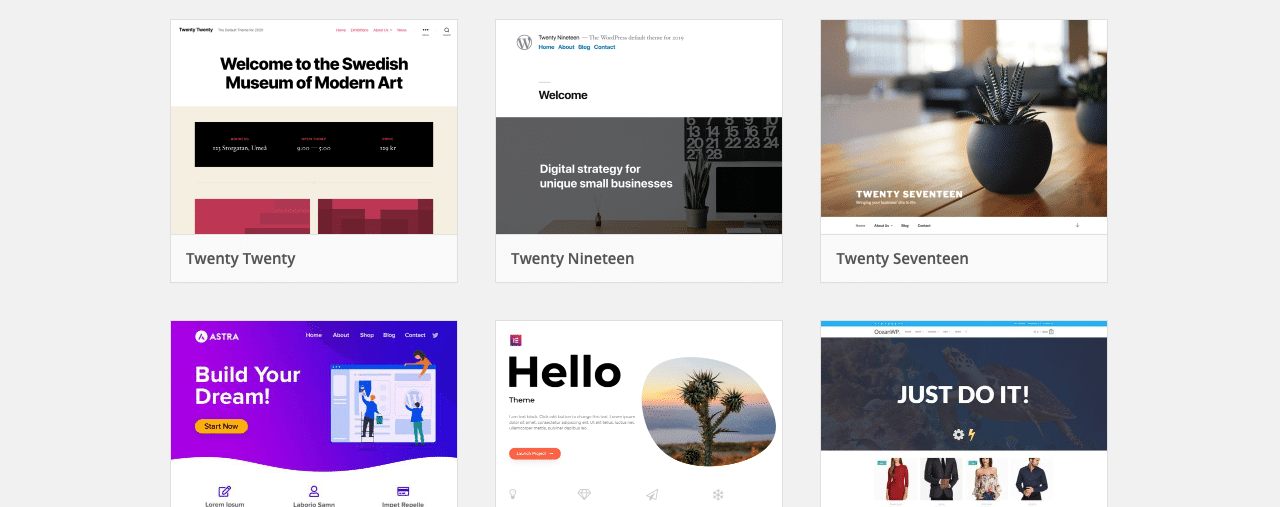
After that you will choose a theme, but don’t worry this can be changed later on.

Pro tip: if you are wanting to do any sort of affiliate marketing I highly recommend choosing the astra or divi theme.
After you complete that you will be taken to a screen that says “Start Building” you will want to click that button. If you get an error message click on the hosting tab and you will be brought back to the home page.

From the home page you will want to click the “log into wordpress” button

You will end up on a page that looks like this.

Next, click on “I don’t need help” right below the Business and Personal buttons
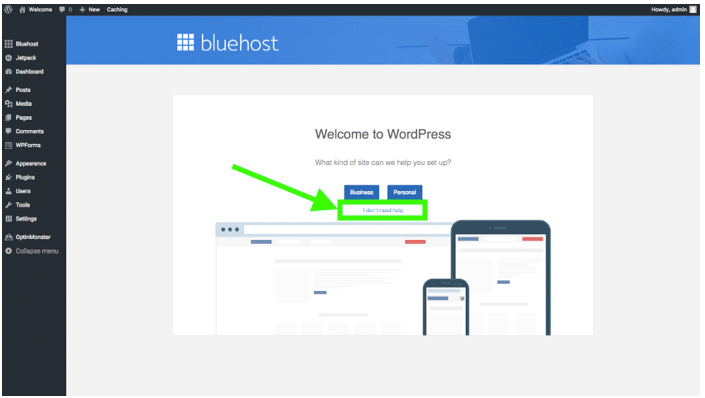
You will end up here. This is where you will be building and editing your website, so look around and get familiar with all of the tabs on the left.
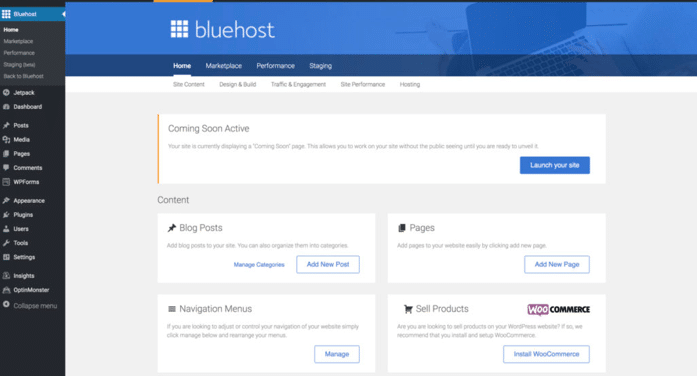
Congratulations you have officially started your blog!

Now that you have your blog up, start adding high quality content to it.

Once you have a decent amount of content on your site you need to start growing your site.

The key to growing your site is traffic and email marketing. Without traffic your site is dead, so pay attention to details when driving traffic.

7. promote 

How To Get Traffic Flowing To Your Blog

Ok, now the fun begins! I will show you the methods that I use to get a lot of good engaging traffic to my website, the best part is that they are all free.  The first method is to find a relatively new article on another website, a week or so old, and then comment on it. If the post gets more popular, your comment will be at or near the top. Include the link to your own blog in the comments section, and you can increase traffic that way. Just make sure to keep things natural and don’t allow your comments to feel or sound like spam, and you’ll be good to go.

Another method is to fill your content with a few small volume keywords. Why do you want to go with these small volume keywords (300 to 500 searches a month) and not ones with higher search volume? Simple – the more small volume keywords you include in your content, the more they add up.

Another trick is to become active on social media pages and forums that are relevant to your niche. Make natural comments in them (i.e. do not sound spammy) and include links to your content. Ideally, you’ll find a relevant page on your blog that you already have written to link to.

Growing an email list

Growing an email list is a must!

Building and growing an email list is an excellent method that you can use to engage with followers as well. To engage with your followers on your email list, you can send them updates on your blog, special deals on any products or services that you will be providing, special articles or tips exclusively for them, and so on.  I use Getresponse for my email management, it does cost a little bit of money but it’s well worth it.  The best way to build your email list will be to offer your blog’s visitors a free gift in exchange for signing up for the list. For example, you can offer a free eBook that you’ve written to them in exchange for becoming a part of your email list. You also need to have opt in forms on your website like shown below.


To create these opt-in forms I use a website plug in called Thrive Leads.

Why Should You Start a Blog?

Why do you want to start a blog? Have you ever really asked yourself this?

Many people say they want to start a blog to either earn money or to earn a side income. There’s no denying that treating your blog as a business and a means to earn an income is a wonderful benefit of it.

But there are also many benefits to starting a blog that go beyond making money. The first is that it enables you to get creative. There’s nothing that will allow your creative juices to flow more than writing content that you are both passionate and knowledgeable about.

The second reason is because a blog gives you a voice. In other words, it enables you to share your passions and your knowledge with other people. Starting a blog is a great way to learn more about yourself and your hobbies, but it’s also a great way to teach what you know and communicate your personality to people all around the world.

Starting your own blog also enables you to make connections with people who share the very same passions that you do. You may engage with readers and end up making valuable connections there, or you may get to reach out to other bloggers in your same niche as well.

What do you love to do?

Creating a blog is easily one of the most effective ways to just enjoy life more – you can pursue your passions and learn more about your hobbies, for instance. Even if you don’t have very many followers, at least it will be extremely self-fulfilling to learn more for yourself.

Finally, creating a blog also enables you to grow your business. If there are any products or services that you want to sell, you can potentially find people interested through your blog. You can also establish yourself as being an expert in your field, which will further open up numerous business opportunities.

What to do Next

Now that we have walked you through the step-by-step process of getting your blog running, you’re probably wondering: what do I do next?

Once you have chosen your niche, purchased a domain name, and set your blog up, the only next thing for you to do is to begin writing.

Site Pages

Start by writing the homepage of your blog, and the about you pages. The home page should inform the visitor of what the blog is about and allow them to navigate around; you may want to have a ‘sitemap’ feature installed if you so choose. You will also need a privacy policy and a disclosure page but don’t worry you can get these from a template or hire a professional to write them for you.

Putting up Content

Then you have to start building your brand as you begin building your content. Focus on putting up core high quality content. When I say core content I mean what is your blog really about and what are the fundamentals of your niche topic.  Engage with your readers and reach out to other bloggers in your same niche and see how you can help each other out, such as through guest posting or collaboration, so you can send each other your readers.

And remember: be consistent. Make it a habit that you upload a new article post on a consistent basis. Whether it’s every day or Monday and Friday, or just once a week, your visitors need to know when they can expect a new post. It’s your blog you make the schedule.

Drive Traffic

After you have your core content on your blog it is time to then start driving traffic. Traffic is key to your success.

Email Marketing 

Like I said earlier, email marketing is a must to growing your blog.

While it’s possible that your blog could become a major overnight success, it’s more reasonable to expect that your blog will build its audience over the course of time. Keep your end goals in mind and plan on building your blog through small steps. The life of a successful blogger who works from anywhere can be yours if you truly commit yourself to making it happen.

Take action now!

Share this Article:

Kirk

Kirk

Loves personal finances and helping people reach financial freedom

Related Reading

Leave a Comment

Your email address will not be published. Required fields are marked *